Federal enforcement of the NFA registration rules for suppressors and short-barreled rifles has stopped, for now. Some state laws have not caught up. On October 9, 2026, the Firearms Policy Coalition (FPC) sent letters to the attorneys general of 15 states. It asked them to stop enforcing state laws that depend on the federal registration process.
Texas is not one of the 15. Here is why that matters, and what it means if you travel with a suppressor or SBR.
The Problem: State Laws Built on Federal Paperwork
Many states never wrote their own rules for these items. Some did, and they borrowed the federal system. Their laws make possession lawful only if the item is registered under the NFA.
That worked while federal registration was mandatory. Now ATF has said it will not enforce the approval and registration rules for suppressors, SBRs, SBSs, and “any other weapons.” We cover that change in ATF Ends NFA Enforcement for Suppressors and SBRs – What the October 9 Guidance Says.
A state law that points to a federal process creates a puzzle when the federal process is not enforced. ATF’s FAQ does not solve it. The agency says most states require compliance with federal law or registration, and it cannot say whether an unregistered item counts as lawfully held under any state’s law. Its advice: check with state and local authorities. FPC’s letter calls the result an “untenable legal limbo.”
The 15 States
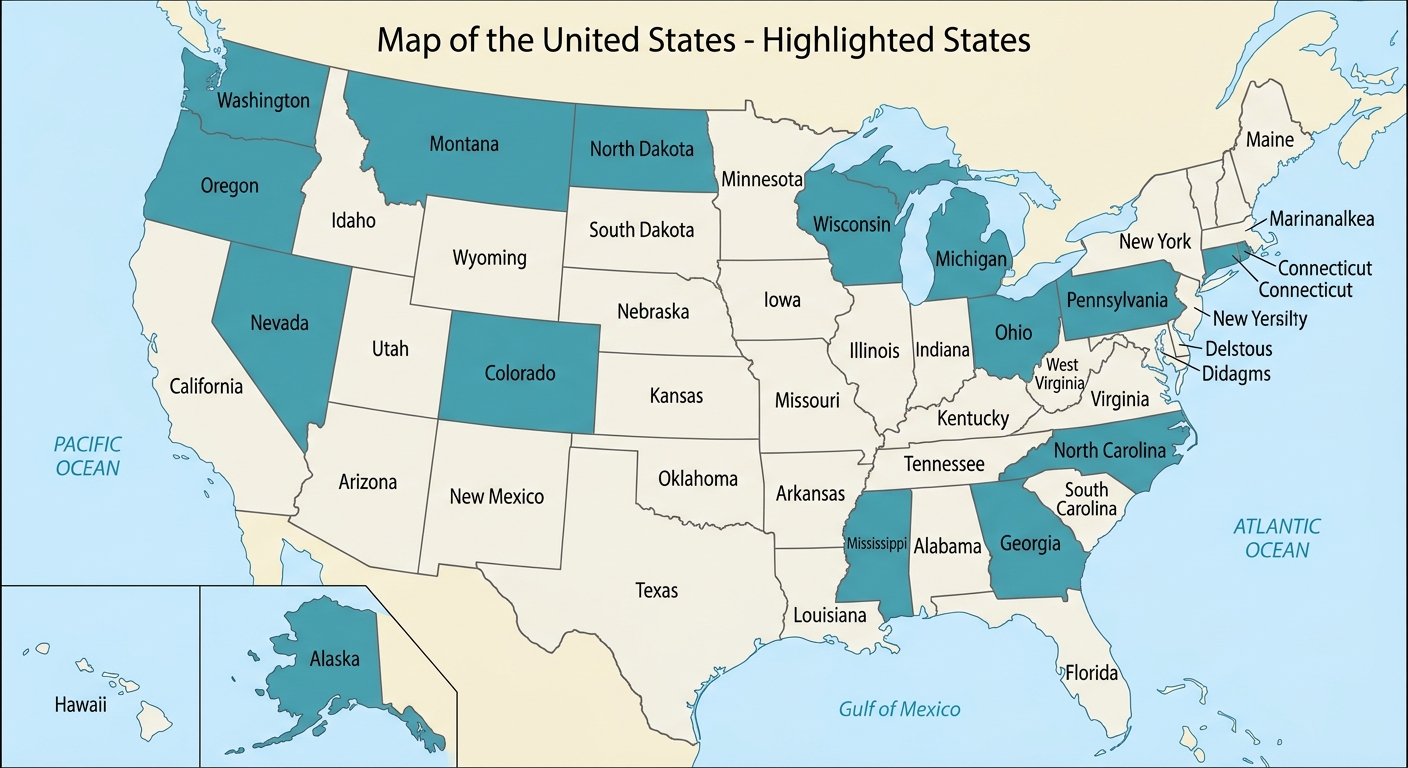
FPC’s announcement lists these states as still tying some NFA-classified arms to federal registration:
- Alaska
- Colorado
- Connecticut
- Georgia
- Michigan
- Mississippi
- Montana
- Nevada
- North Carolina
- North Dakota
- Ohio
- Oregon
- Pennsylvania
- Washington
- Wisconsin
Industry coverage splits the country into three groups. Popular Suppressors counts 27 states with no state-level NFA process, these 15, and eight states plus D.C. where suppressors are banned. ATF’s FAQ confirms that a minority of states prohibit most or all NFA items outright.
Four of the 15 are also plaintiff states in the federal lawsuit: Alaska, Georgia, Montana, and North Dakota, according to the plaintiff list. The two groups of “15” are different lists.
What FPC Asked For
FPC made two requests of each attorney general:
- Immediate non-enforcement. Issue a formal statement, opinion, or memorandum telling state and local police and prosecutors not to enforce the NFA-tied provisions for untaxed items.
- Permanent repeal. Work with the legislature to cut the link between state law and federal registration.
FPC hired Holtzman Vogel partner David P. Johnson to lead the outreach. Its leaders say they hope to avoid a lawsuit and will work with states that move. They also say they will do what is necessary to protect gun owners if states do not.
A letter is a request. It does not change a state statute, and no one has to agree to it. Until a state acts, its law reads the way it did last week.
Texas Is Not on the List
Texas changed its own law first. The Legislature removed silencers from the prohibited weapons list in 2021 under House Bill 957. In 2025 it removed short-barrel firearms from that list, effective September 1, 2025. Texas law no longer makes a suppressor or SBR legal only if it is federally registered.
Silencer Shop, a dealer, lists Texas among 27 states with no state NFA process. Treat that as an industry source, and confirm current Texas law with a qualified attorney before you act on it.
If You Travel or Move
A Texas rule does not follow you across the state line. Keep these points in mind:
- State law governs where you stand. In any of the 15 states, a state law may still require federal registration. FPC warns that people can face state criminal exposure there for items they could hold lawfully in Texas.
- Do not assume the answer. ATF says it cannot tell you how a state will treat an unregistered item. Ask that state’s attorney general or a lawyer before you carry one in.
- Federal travel rules remain. ATF says you must still file a Form 20 before you move an SBR or SBS across state lines.
- Dealers must follow state law. ATF’s FAQ notes that federal law bars a dealer from selling or delivering an item in violation of state or local law.
- Watch for state action. A state could issue non-enforcement guidance or change its statute at any time, and each outcome affects travel plans.
This post is information, not legal advice.
If you plan a trip with a suppressor or SBR, look up the destination state’s law before you pack. Write down what you find and who told you. Ask a lawyer who handles NFA matters if the answer is unclear.
Train hard. Train smart. Train safe.
AI assisted research and editing. Human verified and finalized.
Leave a Reply