
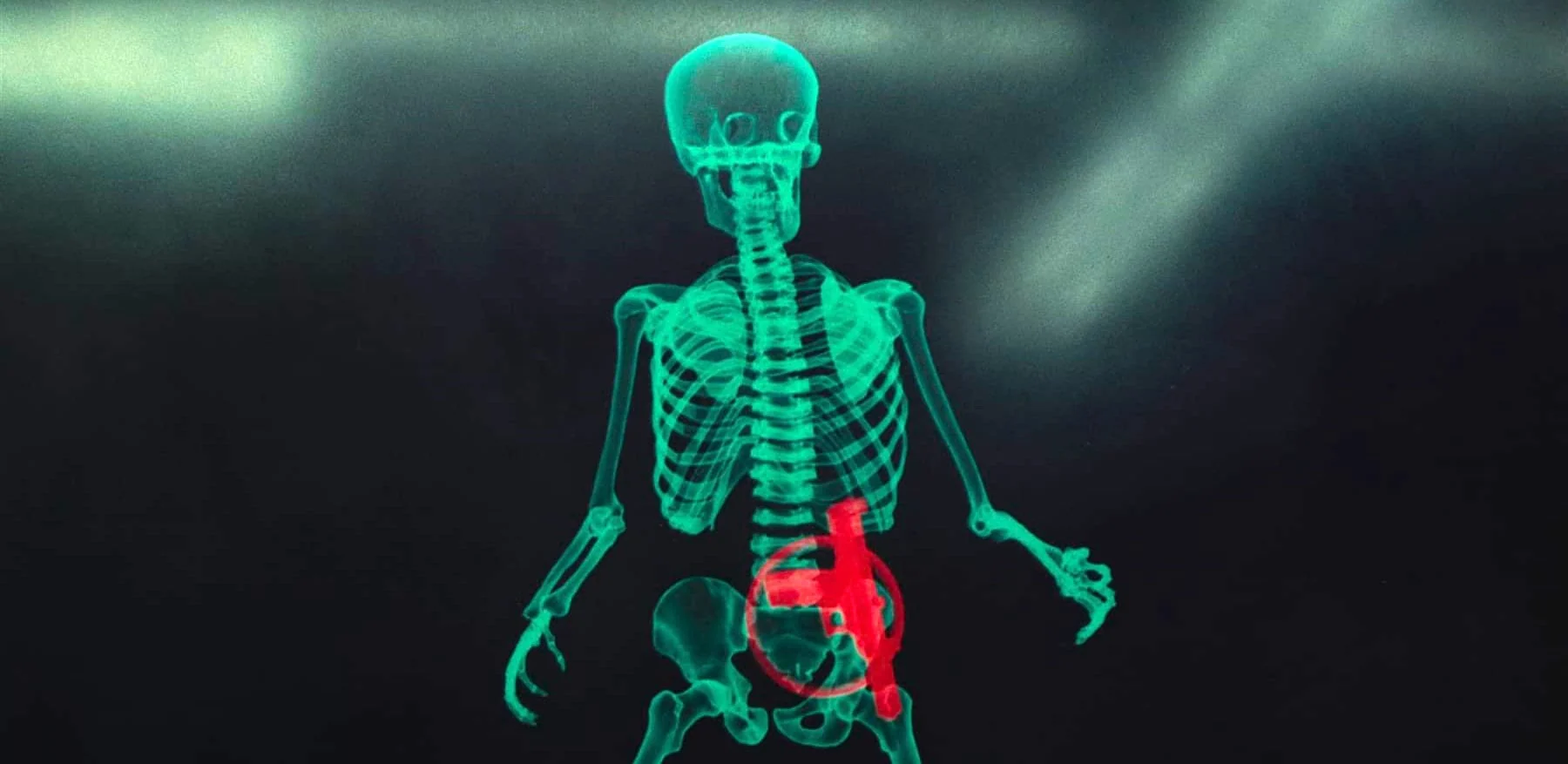
“Concealed means concealed.” Most of us who carry have said it or thought it. If nobody can see the gun, nobody knows it is there.
A research team in Sweden wants to test that idea with Wi-Fi. In mid-October 2026, the Swedish Defense Research Agency (FOI) released a preprint describing an AI system called WiFireNet that tries to spot concealed handguns by reading how Wi-Fi signals bounce off people in a room. Shooting News Weekly covered it with the tone you would expect from a gun site. The research itself is more modest than the headlines suggest, but it is worth understanding. Here is what the system does, what it cannot do yet, and what it would mean for a Texan who carries.
What FOI Built
FOI is Sweden’s government defense research institute. Think of it as a rough Nordic cousin to DARPA.
Every Wi-Fi signal carries something called channel state information, or CSI. CSI describes how the signal changed on its way from the transmitter to the receiver. People, furniture, and objects all bend and reflect radio waves. A metal object on a person’s body changes the signal in a different way than a phone or an empty pocket.
The FOI team set up a test room with two Wi-Fi transmitters on one side and two receivers on the other, running at 5.68 GHz with a 20 MHz channel, according to Cybernews. They used a modified version of the old 802.11a Wi-Fi standard running through GNU Radio, an open-source software radio toolkit.
Volunteers then walked around the room while a normal video camera recorded them. Some carried:
- A deactivated metal handgun, concealed
- A plastic handgun
- A metal water bottle
- A mobile phone
The camera footage was used only to label the training data. After training, the model works from the Wi-Fi signal alone. It draws a box around each person it thinks is carrying something and labels the object. The tests used either a small area of about 8 square meters with up to two people, or about 12 square meters with up to four people, per CyberInsider.
The team released the code and trained model on GitHub and the WiFire dataset on Hugging Face. The paper itself, titled “Concealed Handgun Detection using WiFi Signals,” is on arXiv. Anyone can download it and build on it.
How Well It Works
Short answer: better than a coin flip in a small, clean room. Not good enough for a security line.
- Handgun detection precision: 72.5% under a loose location standard. Under a stricter standard that requires the system to pinpoint where the gun is, it dropped to 53.8% (CyberInsider).
- All object types combined: about 50% under the loose standard and about 47% under the strict one.
- Finding that someone carries something: the system located 83% to 91.5% of carried objects, depending on room size and group size (Cybernews).
That last number matters more than it seems. The system is decent at knowing something is on a person. It is much weaker at knowing what that something is. Cybernews reports the model confused objects with one another, which is what you would expect when a metal water bottle and a metal handgun both sit in the test set.
The researchers are also honest about the limits:
- This is not your home router. The setup used modified radio software, not off-the-shelf equipment. Nothing in the paper shows a stock router can do this.
- Unfamiliar rooms are untested. The training data and test data came from the same recording sessions. How the model performs in a new building, with new furniture and new people, is unknown.
- The numbers are lab benchmarks. CyberInsider points out these are detection scores, not the percentage of people correctly screened at a door.
- Small, uncluttered spaces. A 12-square-meter room is about the size of a large bedroom. A grocery store is a different world.
Why It Still Matters
The prototype is crude. The direction is not.
Per Tom’s Hardware, as quoted by Shooting News Weekly, the next phases plan to use Wi-Fi 7 and Wi-Fi 8, which provide much higher-resolution signal data than a 1999 standard. More data per second and more frequency detail usually means better models.
This also is not the first try. Back in 2018, engineers from Rutgers, IUPUI, and Binghamton showed that ordinary Wi-Fi CSI could flag metal and liquid objects, including guns, inside bags, with reported accuracy above 95% on a small test set (Fossbytes). FOI’s twist is doing it on moving people, several at a time, with the gun on the body.
The authors pitch WiFireNet as a supplement to cameras and metal detectors. It would cover blind spots and work without a guarded gate. That is the part that should get a carrier’s attention. A metal detector is visible. You see it, you make a choice. A Wi-Fi system is invisible. The same access points that give shoppers free internet could, in theory, also be screening them.
What This Means in Texas
Texas law already gives private property owners a clear way to keep guns out. The technology does not change those rules. It could change how often they get enforced.
The sign rules:
- Licensed (LTC) concealed carry: A property owner can bar license holders by giving notice under Penal Code 30.06, either orally or with a sign that meets strict wording, size, and bilingual requirements. Section 30.07 does the same for open carry.
- Unlicensed (constitutional) carry: Since HB 1927 took effect in 2021, owners can bar firearms for everyone under Penal Code 30.05, again with a compliant sign or oral notice.
The penalties:
- Walking past a valid sign is a Class C misdemeanor, fine only, up to $200.
- It jumps to a Class A misdemeanor if the owner or someone acting for the owner personally tells you to leave and you do not.
Today, most 30.06 and 30.05 violations go unnoticed because nobody knows you are carrying. A cheap, invisible detection system changes that math. The likely outcome is not a SWAT team. It is a manager walking up and asking you to leave. That conversation is exactly the moment that turns a $200 ticket into a Class A charge if you argue or stall.
Add false positives to the mix. In the FOI tests, the model struggled to tell objects apart. A carrier who left the gun in the truck could still get flagged for a metal water bottle or a tool on the belt. A non-carrier could too. Expect awkward conversations.
What About Privacy and the Fourth Amendment?
Critics already argue that Wi-Fi sensing raises serious privacy issues, since it needs no special gear and there is little regulation around it (Shooting News Weekly, citing Tom’s Hardware). The question is who uses it.
- Private businesses: The Fourth Amendment limits the government, not your grocery store. A store screening its own customers on its own property faces few legal barriers today.
- Government: Different story. In Kyllo v. United States (2001), the Supreme Court held 5-4 that police using a thermal imager, a device not in general public use, to learn details inside a home was a search that generally needs a warrant. Wi-Fi sensing aimed into a private home looks a lot like that fact pattern. How courts treat it in public spaces, or once the tech becomes common, is an open question.
I am not a lawyer, and none of this is legal advice. If you have a specific situation, talk to a Texas attorney or your legal defense program.
What to Do Now
Nothing about this research changes your legal duties today. It does raise the odds that you get caught ignoring them later. A few practical points:
- Read the signs, and respect them. Know the difference between a valid 30.05, 30.06, or 30.07 sign and a generic “no guns” sticker. A non-compliant sign does not carry the same legal weight, but the owner can still give you oral notice.
- If you are asked to leave, leave. Do it calmly and right away. Do not debate the sign, the technology, or the Second Amendment at the door. Leaving keeps you at a Class C at worst. Arguing can make it a Class A.
- Know the places that are off-limits no matter what. Some locations under Penal Code 46.03 and related sections ban carry by law, with or without a sign. Detection tech will only make those rules easier to enforce.
- Plan your day. If a place you visit often posts a valid sign, decide ahead of time where your firearm stays. Make that choice in the parking lot, not at the door.
- Stay calm if you get flagged by mistake. A false positive is not a crime. Polite, short answers and a willingness to leave will end most of these encounters fast.
The FOI system is a lab prototype with real limits. But the code is public, Wi-Fi is everywhere, and the hardware keeps getting better. The time to know your obligations as a carrier is before a blinking light over the door makes it a live issue.
Train hard. Train smart. Train safe.
AI assisted research and editing. Human verified and finalized.
Leave a Reply